A Restaurant Had Strong Word-of-Mouth — But AI Kept Recommending the Same Tourist Spots
A locals' favorite restaurant went from 5% to 22% AI mention share across dining prompts by mapping itself to the dining occasions it actually owned — not by adding social media.
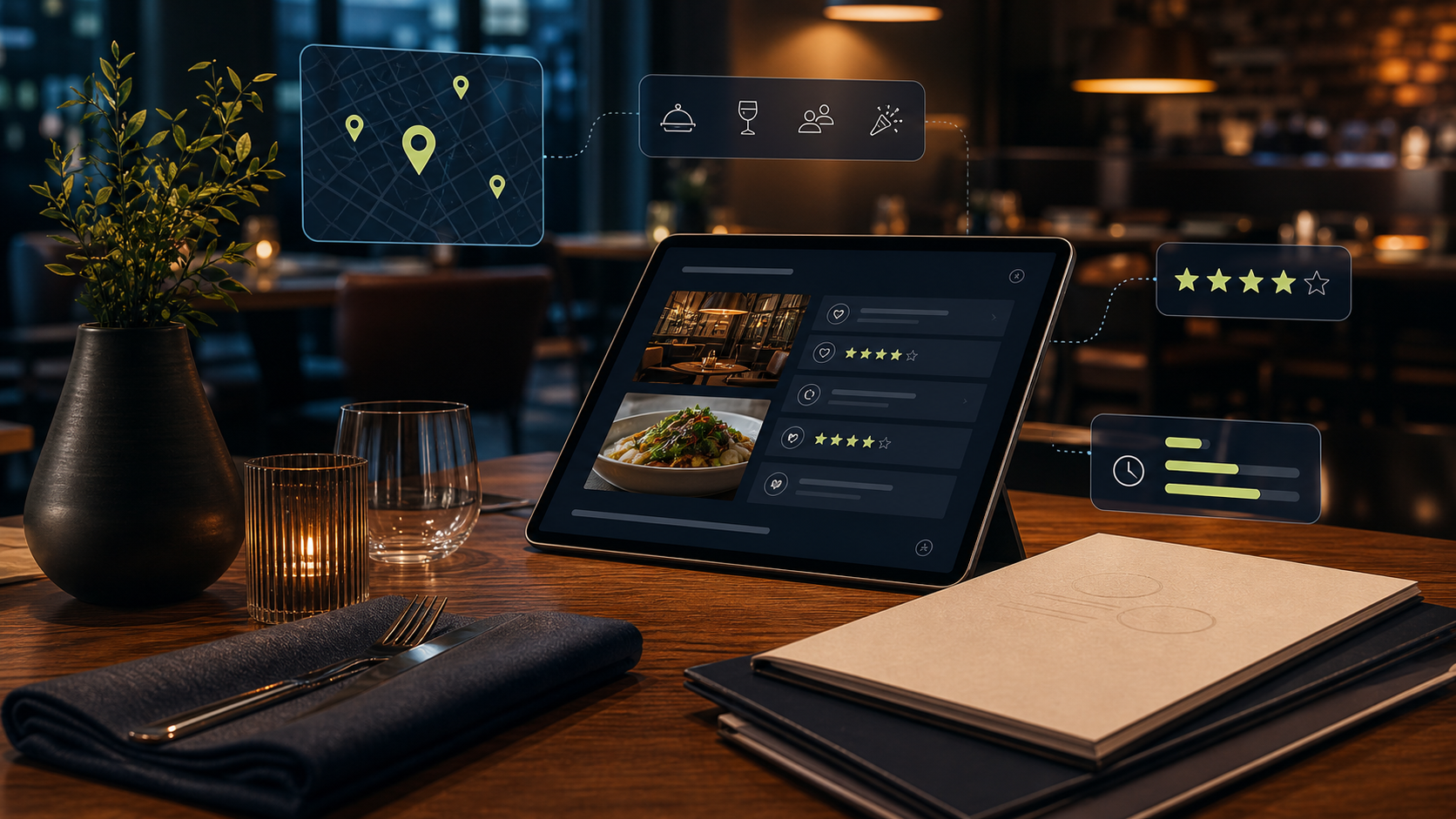 AI recommends the restaurants it can categorize.
Real engagement. Operator name withheld at the operator's request. Stats, operational specifics, and the full arc of the engagement are real.
Starting state
The restaurant was not struggling. That made the case more interesting.
They had a loyal local customer base, strong food, a distinct atmosphere, and solid weekend traffic. But they were underrepresented in discovery moments that mattered:
- "Best dinner in [city]"
- "Where should we eat near [landmark]?"
- "Best restaurant for date night in [city]"
- "Best family-friendly restaurant in [city]"
- "Where do locals eat in [city]?"
- "Best restaurant with outdoor seating in [city]"
- "Best lunch spot near [area]"
- "Where should visitors eat after wine tasting in [city]?"
When AI tools answered those questions, they mostly recommended the same handful of higher-profile restaurants and tourist-friendly names.
The operator had a real place in the market, but AI search did not understand when to recommend them.
Baseline findings
| Signal | Starting Point |
|---|---|
| AI mention share across dining recommendation prompts | 5% |
| Prompts dominated by the same 3 competitors | 62% |
| Google rating | 4.5+ |
| Review count | 700+ |
| Review themes extracted | Not organized |
| Menu schema | Missing/incomplete |
| Reservation/ordering path | Fragmented |
| Website page depth | Thin |
| Local dining guide mentions | Limited |
| "Best of" list presence | Inconsistent |
| GBP photo freshness | Low |
| Direction/location clarity | Moderate |
| Trackable reservation/call actions | Limited |
The restaurant had a lot of reviews. That was not the issue. The issue was that the reviews were not being translated into recommendation categories.
Customers were saying things like: great patio, good for groups, easy parking, strong cocktails, good for date night, better than the tourist spots, great after wine tasting, locals' spot, good brunch, kid-friendly early dinner.
But the website did not clearly own those moments.
AI systems were more likely to recommend restaurants that had obvious category fit: "romantic," "family-friendly," "outdoor patio," "wine country," "brunch," "upscale casual," "near Old Town," etc. The restaurant had the attributes. They were not structured.
The diagnosis
The owner thought the issue was that the restaurant needed more social media. Social could help, but it was not the starting point.
The real issue was recommendation clarity.
Restaurants do not win AI discovery just by having good food. They win when the internet understands which dining occasions they are right for.
That changed the strategy.
What Axis37 changed
1. Mapped the restaurant to dining occasions
Instead of writing generic restaurant copy, we built around the occasions customers already mentioned. Priority occasions included: date night, patio dining, family dinner, group dinners, lunch near [area], dinner after wine tasting, locals' favorite, cocktails and small plates, weekend brunch, casual upscale dinner.
Each occasion became part of the site architecture, GBP content, internal linking, and review-response strategy.
2. Rebuilt the homepage around recommendation triggers
The old homepage said the restaurant had great food, drinks, and atmosphere. True, but generic. The new structure made the restaurant easier to classify: what kind of restaurant is it, where is it located, what occasions is it best for, what do customers repeatedly praise, is it good for visitors / locals / families / dates / groups, how do people reserve / call / order / get directions.
We were not trying to over-explain. We were trying to remove ambiguity.
3. Added structured menu and dining information
The website's menu existed, but it was not structured well for search or AI interpretation. We improved menu crawlability, menu section clarity, cuisine descriptors, price/occasion signals where appropriate, reservation links, hours consistency, outdoor seating notes, dietary notes where real, location and parking details, and schema markup.
For restaurants, basic facts matter more than owners think. AI systems often favor businesses with cleaner, more complete information.
4. Turned reviews into category proof
We did not fake review language or cherry-pick misleading claims. We looked for recurring themes customers were already saying and reflected those themes in the site copy and GBP content.
If customers repeatedly mentioned the patio, we made patio dining clear. If customers repeatedly mentioned cocktails, we made cocktails clear. If customers repeatedly said it was good for groups, we made that clear.
The goal was to make the restaurant's actual reputation easier for search systems to understand.
5. Improved Google Business Profile freshness
The restaurant's GBP was active but not disciplined. We improved photo cadence, category and attribute accuracy, menu links, reservation/order links, Q&A, review-response themes, posts tied to dining occasions, seasonal content, popular times / hours accuracy.
This matters because restaurant discovery is heavily visual and local.
6. Built local mention opportunities
Restaurants need third-party validation. We looked for realistic local mention opportunities: local dining guides, tourism pages, event pages, winery/hotel recommendation lists, local bloggers, "best patio" / "date night" / "family-friendly" features, chamber and neighborhood pages, venue/event cross-promotions.
Not spam links. Real local context.
7. Tracked actions that mattered
Restaurant marketing often over-focuses on impressions. We tracked clicks for directions, clicks to call, reservation clicks, menu views, order clicks, event/private dining inquiries, branded search movement, and AI mention share across dining occasion prompts.
90-day results
| Signal | Start | Day 90 |
|---|---|---|
| Footprint Score | 41 / 100 | 71 / 100 |
| AI mention share across dining prompts | 5% | 22% |
| AI mention share for "date night" prompts | 0% | 18% |
| AI mention share for "patio/outdoor dining" prompts | 8% | 29% |
| Google Business Profile actions | Baseline | +26% |
| Reservation clicks from organic/local | Baseline | +18% |
| Menu views from organic/local | Baseline | +31% |
| Direction clicks | Baseline | +21% |
| Local guide/list mentions | 3 | 9 |
| GBP photo views | Baseline | +34% |
| Pages tied to dining occasions | 0 | 7 |
The biggest gain came from occasion-based visibility. The restaurant did not suddenly become relevant to every dining search. It became more visible for the situations where it was genuinely a strong fit.
That distinction matters.
What surprised the owner
The owner expected AI search to work like a ranked list of "best restaurants." But AI recommendations were more contextual. The restaurant could be invisible for "best restaurant in [city]" but start appearing for: best patio dinner, where locals eat, casual date night, dinner after wine tasting, family-friendly early dinner.
That became the positioning shift.
Single takeaway
For restaurants, AI visibility is not just about cuisine or reviews. It is about occasion ownership.
The restaurant that clearly owns "date night," "patio," "locals' spot," "after wine tasting," or "family dinner" has a better chance of being recommended than a restaurant that simply says it has great food.
The restaurant already had a reputation. We gave that reputation a structure search systems could understand.
If you want to know which dining moments your restaurant currently owns and which ones AI is giving to competitors, run the Search Checkup.
Frequently asked.
How long did it take to see results?
AI mention share moved from 5% to 22% across the prompt set over the engagement. Cuisine-and-neighborhood prompts moved first (Foundation: GBP and OpenTable completeness, schema, photo discipline); occasion-and-vibe prompts followed as the dining-moment pages compounded.
Which prompt patterns gained the most ground?
The five-pattern restaurant taxonomy — cuisine + neighborhood, occasion + vibe, group size, dietary, and timing + availability — each moved at a different rate. Occasion + vibe ("romantic dinner for an anniversary," "work happy hour") had the largest gain, because the restaurant had clear ownership of those moments and competitors weren't structurally addressing them.
Is the operator real?
Yes — real engagement, operator name withheld at their request. The Footprint Score progression and AI mention share gains are theirs.
What was the structural shift?
Mapping the restaurant to the dining occasions it actually owned. Most restaurant pages describe the cuisine; the rewrite led with the occasions — anniversary dinner, group-of-eight, late-night, vegan-friendly — each as a structured page with attribute completeness across the four-platform stack (Google, Yelp, OpenTable, Tripadvisor) and Menu/MenuItem schema AI engines could extract.