Credibility signals
Brand, proof, photos, reviews, and service detail make the operator easier to trust before the buyer calls.
Tactical websites
Brand. Usability. Proof. Tracking.
We build and improve websites around the work you want. The page has to show what you do, where you work, why buyers should trust you, and how to take the next step. It also has to be structured so Google and AI systems can understand the same facts.
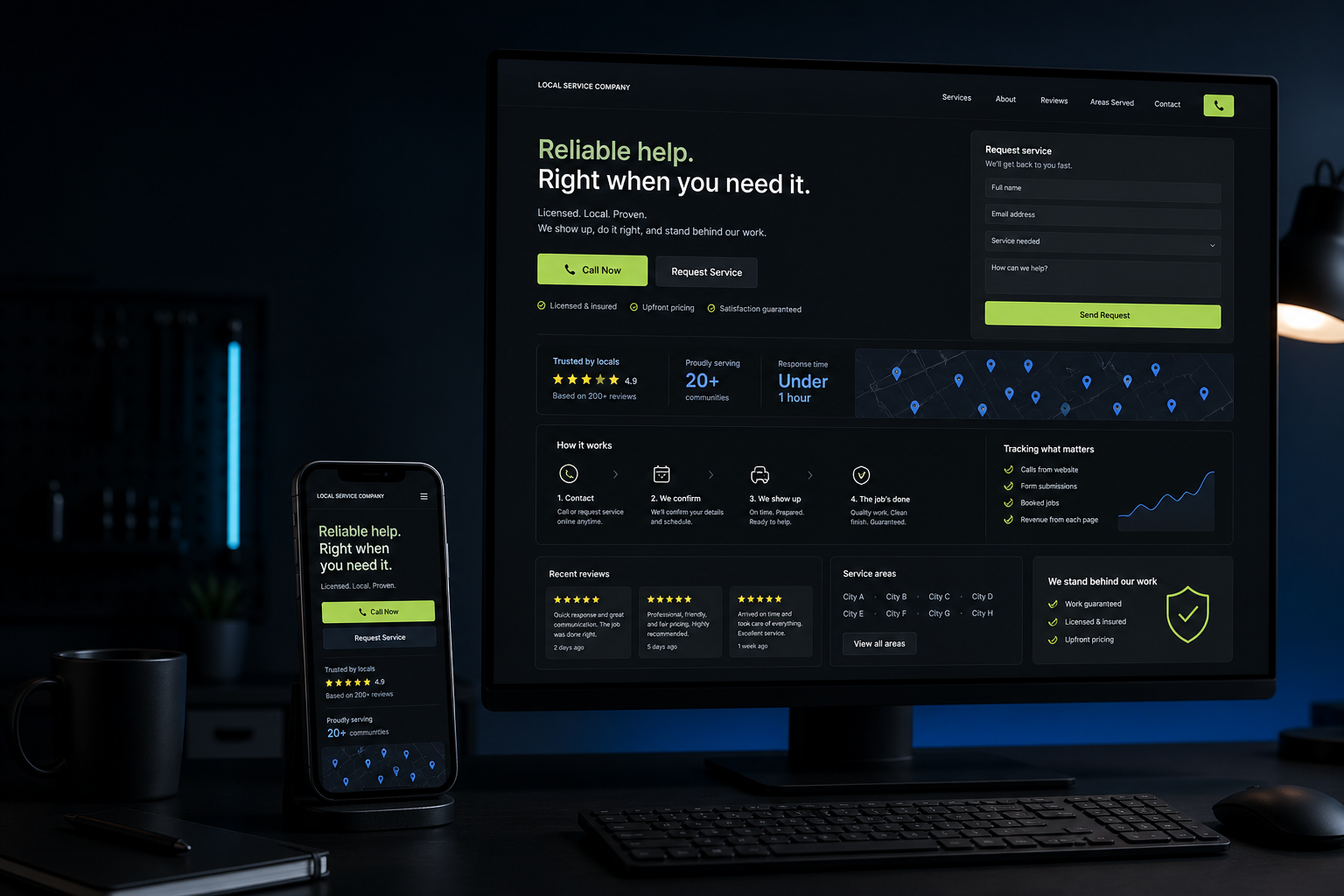
Axis37 treats websites as Conversion-phase infrastructure. The work combines credible brand presentation, mobile usability, service-page hierarchy, proof placement, speed, and attribution so the site can turn visibility into calls, forms, bookings, cases, or reservations.
A useful website is organized around the services people search for, the proof they need before choosing, and the action path that creates the outcome.
Design, copy, brand, proof, and tracking all have one job: help the right buyer act and show which page created the move.
Brand, proof, photos, reviews, and service detail make the operator easier to trust before the buyer calls.
Calls, forms, bookings, directions, and service choices stay obvious on the screen buyers actually use.
Pages are structured around the work, locations, and decisions that matter instead of generic brochure sections.
Calls and forms are traced back to the page, service, and path that produced them.
The Recommendation Report turns calls, forms, bookings, cases, and reservations into next moves. It shows which pages are working, which pages leak buyers, and which constraint gets fixed next.
See a Sample Recommendation ReportEmergency plumbing
Tap-to-callCalls risingWeak city proofRoof repair
Form submitLow conversionCTA below proofLease disputes
Consult requestQualified casesMissing attorney proofPrivate dining
Booking clickMobile drop-offSlow menu pathUseful for buyers, useful for Google, credible enough to trust, and structured enough for answer engines to understand.
Buyers rarely start with a broad company category. They search for the specific job, case, booking, or service in front of them.
The website needs pages that match those real needs. Each important page should explain the problem, the work, the market, and the next step.
Service decisions are trust decisions. Buyers want to know whether you are local, responsive, experienced, and safe to choose.
The page should surface reviews, photos, credentials, service-area proof, and specific work detail before doubt sends the buyer back to search.
Mobile is where hesitation gets expensive. The buyer should not have to hunt for the call button, form, booking path, address, hours, or service fit.
A stronger page keeps the action visible, keeps the copy scannable, and removes dead ends between the search and the outcome.
Search engines and answer tools need clean headings, direct answers, FAQ sections, schema, internal links, and current service details.
When a buyer searches or asks who to choose, the site should make it easy to verify what you do, where you work, and why you are credible.
A website is not finished when it launches. It is working when calls, forms, bookings, cases, or reservations can be traced back to the page that created them.
The Recommendation Report uses that data to show what gets tightened next.
Brand and usability are not decoration. They decide whether the buyer trusts the company enough to call, fill out the form, book the table, or request the consultation.
Review current pages, brand proof, mobile actions, speed, rankings, and tracking gaps.
Choose the services and markets that deserve dedicated conversion pages.
Structure service pages around buyer intent, proof, and action.
Connect calls and forms to the pages and services that produced them.
Use the Report to see where buyers act and where they drop.
Improve proof, CTAs, page speed, and service depth based on outcomes.
The page structure changes by vertical because the proof, urgency, and action path change by vertical.
Emergency intent, service-area trust, and booked-job tracking for plumbing operators.
See the vertical ->RoofingWebsites for roofingStorm timing, project proof, search visibility, and signed-work tracking for roofing operators.
See the vertical ->HVACWebsites for hvacPeak-season demand, replacement trust, and booked-work tracking for HVAC operators.
See the vertical ->RestorationWebsites for restorationLoss-type visibility, emergency response proof, and job tracking for restoration operators.
See the vertical ->ElectricalWebsites for electricalService-call demand, panel and EV work, and booked-job tracking for electricians.
See the vertical ->Law FirmsWebsites for law firmsPractice-area authority, attorney proof, and intake tracking for law firms.
See the vertical ->RestaurantsWebsites for restaurantsCuisine discovery, reservation paths, and private-event tracking for restaurant operators.
See the vertical ->It depends on the starting structure. Sometimes cleanup, page additions, and tracking are enough. If the current site cannot support service pages, mobile actions, proof, and attribution, a rebuild makes more sense.
Usually, yes. The page has to answer what you do, where you work, why buyers should trust you, and how to act. Existing copy often needs to be rewritten around those decisions.
The rebuild has to protect the pages and signals that already matter. URL structure, redirects, schema, internal links, and service-page intent are mapped before the new site ships.
Calls and forms should be tied to the page, service, and source that produced them. Without that, the website can look better while the operator still cannot tell what created the outcome.
Websites are Conversion infrastructure. Local SEO and AEO can create visibility, but the site has to make the buyer trust the operator and take action.
The Search Checkup shows where buyers drop, which pages are underbuilt, and what needs to be tightened first.
Get My Search Checkup