What is lead tracking?
Lead tracking connects calls, forms, bookings, cases, reservations, and applications back to the page, profile, campaign, ad, or source that created them.
Is this different from call tracking?
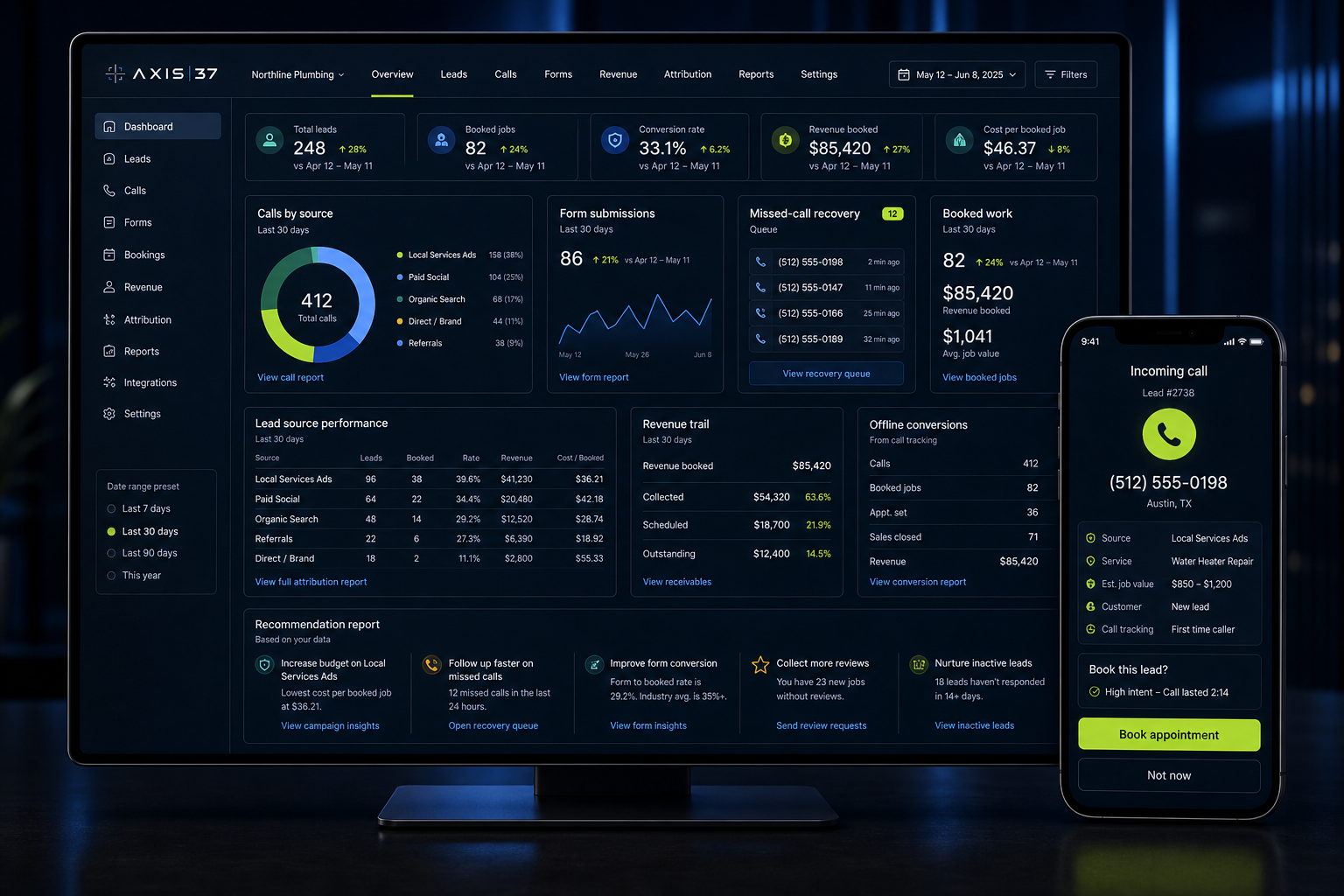
Yes. Call tracking is one core layer. Lead tracking and analytics also cover forms, bookings, missed calls, source attribution, lead quality, offline conversion tracking, and revenue trail visibility where possible.
Can you track revenue?
Yes, when the data supports it. If CRM, booking, POS, case intake, or invoicing data is clean enough, the trail can connect source to revenue. If it is not clean yet, Axis37 starts with qualified opportunities and booked work while the handoff improves.
What if our CRM is messy?
Then the first job is to map what can be trusted. Clean source capture, call tracking, form tracking, booking status, and simple lead-quality categories usually create better visibility before a full CRM cleanup is finished.
Do we need call tracking numbers on every page?
No. Tracking should match decision value. High-intent service pages, ad campaigns, GBP, LSAs, paid social, and major sources usually deserve clearer tracking than low-value pages.
Can this track Google Business Profile, LSAs, and paid social?
Yes. GBP actions, Local Services Ads leads, paid social campaigns, search campaigns, organic pages, and referral sources can all be tracked when the setup and source data are structured correctly.
How does this connect to the Recommendation Report?
The Recommendation Report uses lead tracking and analytics to show which sources created qualified opportunities, booked work, and revenue where available, then names the next move.